

Transactions 101
Whether you represent a buyer or a seller, there are a lot of steps involved in the transaction process. This list is curated by seasoned agents, to help provide a framework for newer agents to work from. This ensures that every new agent is not only well-versed with the state's real estate norms but also equipped with the knowledge they need to be confident.
Click the buttons below to download sample timelines and document checklist for your reference.
We opened escrow. Now what?
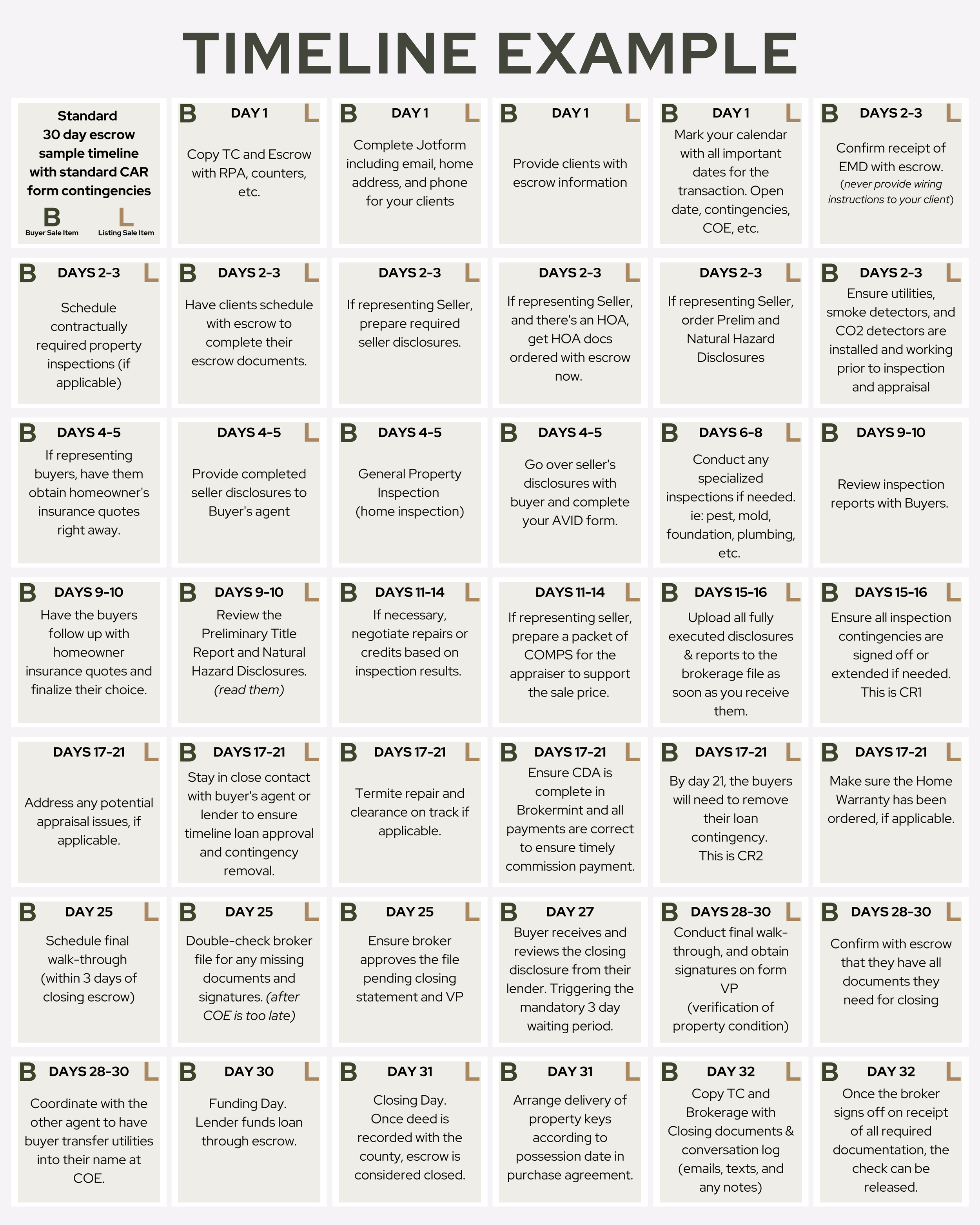
Remember, even if you hire a transaction coordinator (TC) ultimately all of the documentation and steps involved in the transaction process is up to you, the agent. (That’s why you get paid the big bucks, right?) Below you will find a visual example of a standard 30 day escrow and all the steps needed to meet your contractual deadlines and responsibilities.
As you can see, getting your client into escrow is just the beginning of the work, there’s still a lot to do. So, mark up your calendars to stay on track.
Reminder: Escrow and Lenders are not open on the weekends or on holidays; plan your time accordingly.
About Seller Disclosures
As I’m sure you’re aware, sellers must disclose anything they know about the property to the buyers in the form of seller disclosures.
CAR (California Association of Realtors) forms - multiple forms that the seller must fill out to disclose all known facts about the property; recent repairs, leaks & issues, neighborhood nuisance, etc., as well as what conveys with the property, such as appliances and systems. See our brokerage file checklist for the appropriate list of CAR forms.
Environmental disclosures - typically this is a booklet from the state about earthquakes, radon, and other environmental hazards for homeowners to be aware of, along an acknowledgement page for everyone to sign.
Natural hazard disclosures - this is ordered from an NHD company to reveal if the property is in a flood or fire zone, and if there are other hazards such as oil wells on or near the property.
Preliminary title report - this is a report from the title company to identify who the legal owner of the property is, and if there are any title issues that may affect the sale.
Covering yourself with conversation logs

Real Estate is a litigious business. Remember, if it’s not in writing, it doesn’t exist. If any agreements or conversations that you have over the phone or in person doesn’t have a written record, it can lead to a lot of misunderstandings. Luckily, there are some easy ways to make sure everyone is always on the same page.
Follow-up, follow-up, follow-up. If you have a conversation, follow up with a text or email confirming the discussion.
Example: “I’m confirming that seller will have all of their belongings out by the 5th and that the buyers are doing their final walk-through on the 6th. I’ll let you know anything changes”.
At the end of escrow, you will need to download all of your emails and text messages as a PDF and upload them to your broker file. Why do we require this? Because if there’s a disagreement about something someone said in a transaction 2 years ago, we will have written documentation about what was discussed and can pull it up quickly, rather than hope we can find all of our emails and text messages.
Click here for information on how to download all of your emails into one PDF.
Click here for information about apps you can use to create a PDF of your text messages.
Contractual Changes
If any discussion is about a change to the contract, such as timeline extensions, repairs, etc. This needs to be done with an addendum. An email or text isn’t enough for that.
For example: If the buyer needs more time before they can remove their loan contingency, first have the conversation with the listing agent, come to an agreement about the amount of time needed, then draft an Extension of Time Addendum and have all parties sign.

If there is a credit or change to a financial aspect of the transaction, escrow must do an Amendment.
For example: If the buyer is asking for a $2000 credit in lieu of repairs, first the Buyers agent would draft an RR (Request for Repair) asking for the credit, then the Listing agent would respond with the RRRR (Seller Response to the Request for Repair). Once all parties agree and sign off, Escrow will need to draft an escrow amendment to credit the buyer.
FYI: NO financial exchanges may happen outside of escrow. If the buyer is asking for a closing cost credit, it must go through escrow. The seller cannot give the buyer cash at closing.